Instance-segmentation report and overlays
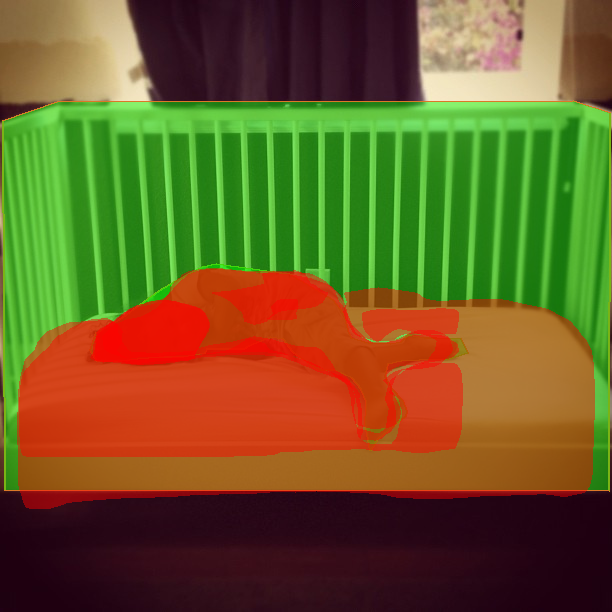
A checked demo that pairs a JSON metric report with visible mask overlays.
Expected companion files or fields
instance_seg_demo_report.jsonoverlays/*.pngdemo_config.json
See what each workflow produces and which files to inspect.
A checked demo that pairs a JSON metric report with visible mask overlays.
instance_seg_demo_report.jsonoverlays/*.pngdemo_config.jsonGenerate eight labeled images, validate the inputs, and run COCOeval. The example also includes a release check. Its synthetic predictions test the workflow, not model accuracy.
labeled_preview.pnglabeled_sample_coco.jsonlabeled_sample_qualification/qualification.jsonlabeled_sample_qualification/checksums.jsonConvert Detectron2, MMDetection, YOLOv8, or YOLOX outputs to the shared prediction format before scoring.
wrapped predictions JSONmeta.export_settingsadapter/source identityThe support matrix lists implemented, conditional, and unsupported backends. A skipped run has no passing result.
benchmark support metadataexplicit support statusskip or failure reason where applicableThis synthetic image illustrates the required files and source records. It does not measure TTT effectiveness; TTT remains a Research feature.
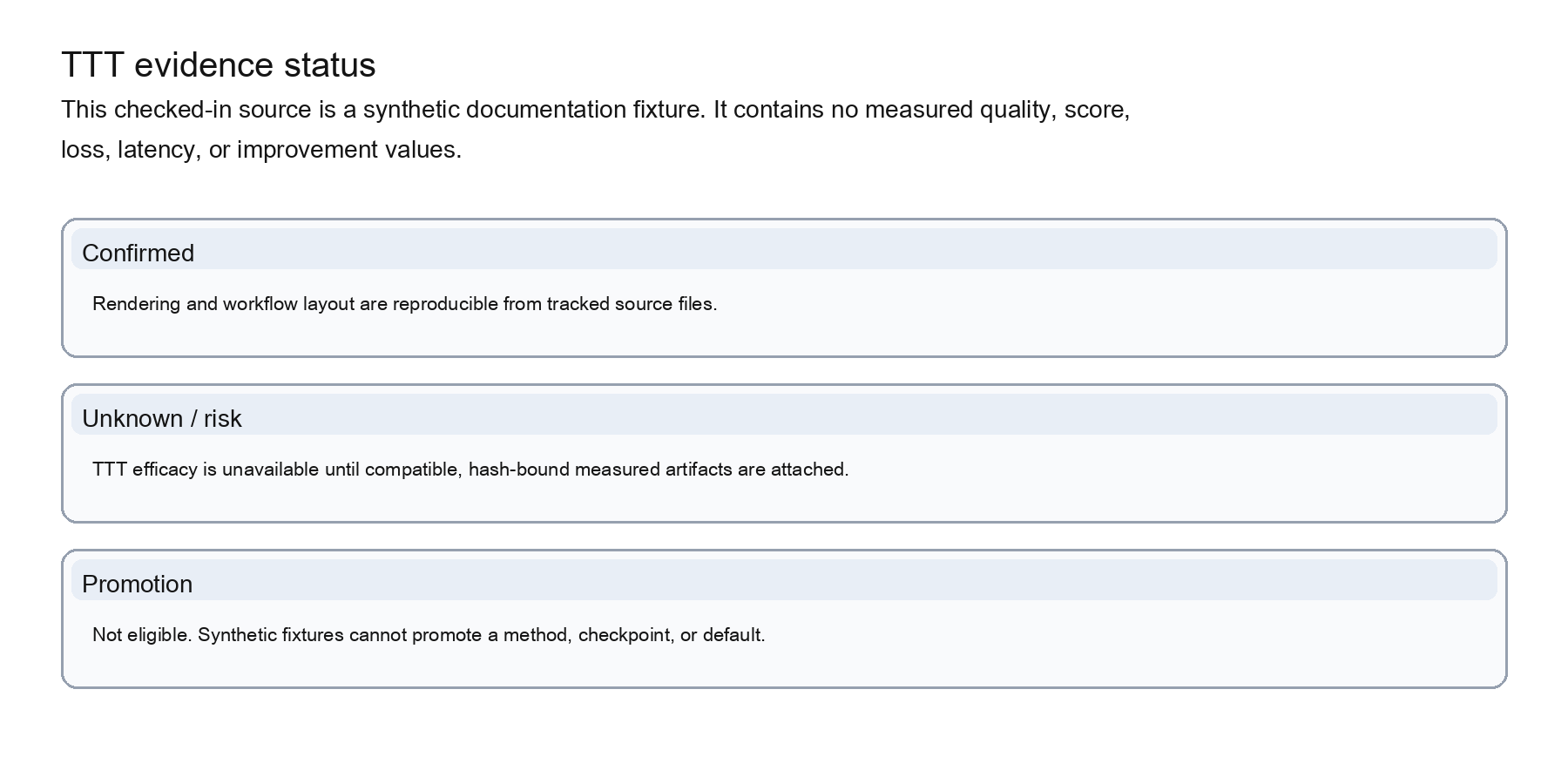
baseline_predictions.jsonmethod_predictions.jsonbefore_after_compare.jsonTTT log and plan